
Summary of a presentation by Mark Sabolch at our 16 May 2026 meeting.
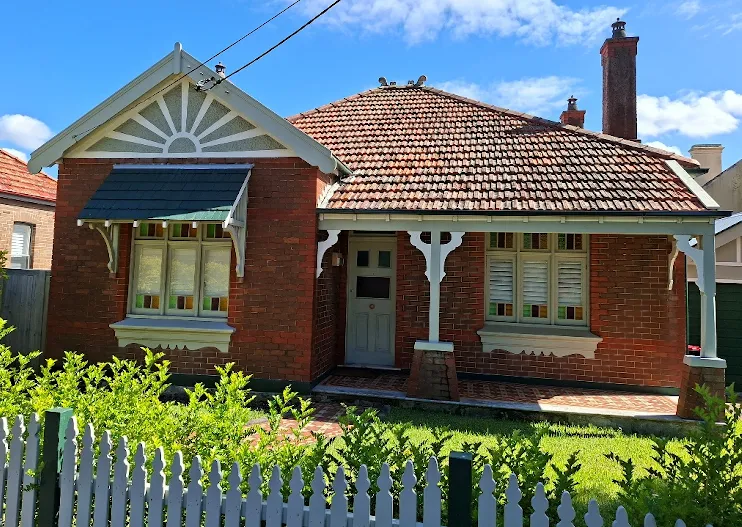
Popular books on the “Federation” house tend to leave an impression that this is a uniquely Australian house style which had its origins in the invigorated national spirit that was associated with the Federation event of 1901.
To dispel this myth, Mark shared the story of how art historian Bernard Smith published a review on Max Freeland’s 1968 book Architecture in Australia, that led to the Australian Queen Anne style being re-labelled to a name more meaningful to Australians, the Federation style, in 1969.
Mark’s presentation went on the explore the genesis of the Queen Anne style in England in the 1870s, with the sentiments of the art critic, John Ruskin, being an important cultural force. Examples of the works by several British architects who worked in this idiom were demonstrated, with their work sometimes being referred to as English Domestic Revival, Tudor Revival or even the School Board style. It became clear that Queen Anne was a term to encompass a movement that encapsulated a range of English medieval (or at least pre-industrial) influences. Underlying this new cultural movement was a renewed appreciation for craftsmanship – a work ethic that the Industrial Revolution was tending to make obsolete.
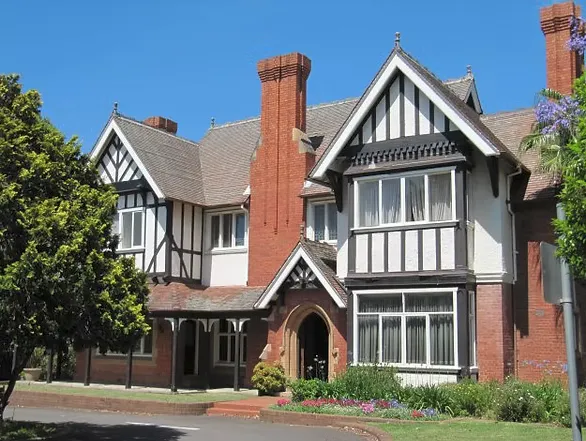
Ruskin’s ideas and the Queen Anne style in particular also entered Australian architecture in the late nineteenth century, with an early local example being West Maling on King Georges Road, Penshurst, and the remarkable Dutch detailing on the gable on Dappeto on Wollongong Road, Arncliffe, both state heritage-listed.
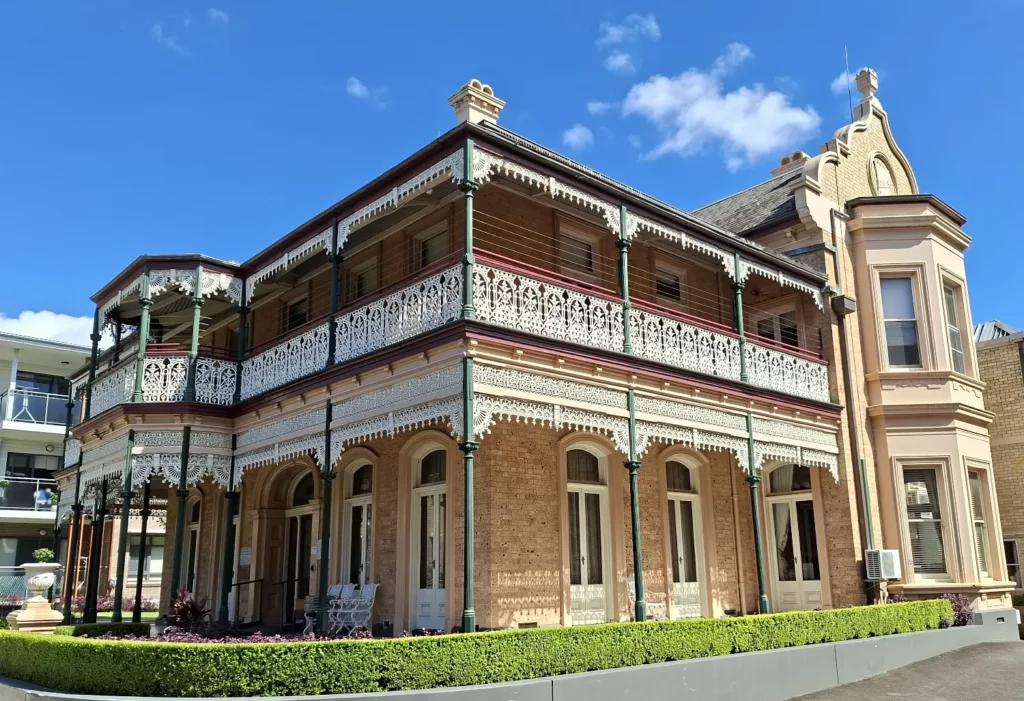
Behind the architectural elements of the Federation house lie considerable cultural values that were not particularly Australian, and Mark systematically explored each of these as either derived from Ruskinian values (such as honesty in the use of materials), new products available in the marketplace (roof tiles from Marseilles, the south of France), picturesque asymmetry (derived from the Italianate style) or the use of flora and fauna motifs (espoused by Lucien Henry, the French artist who had moved to Sydney in 1878).
Mark highlighted many pictorial examples of local houses showing the transition from the Victorian Italianate style to the Federation Queen Anne and others showing mature local examples of the style.