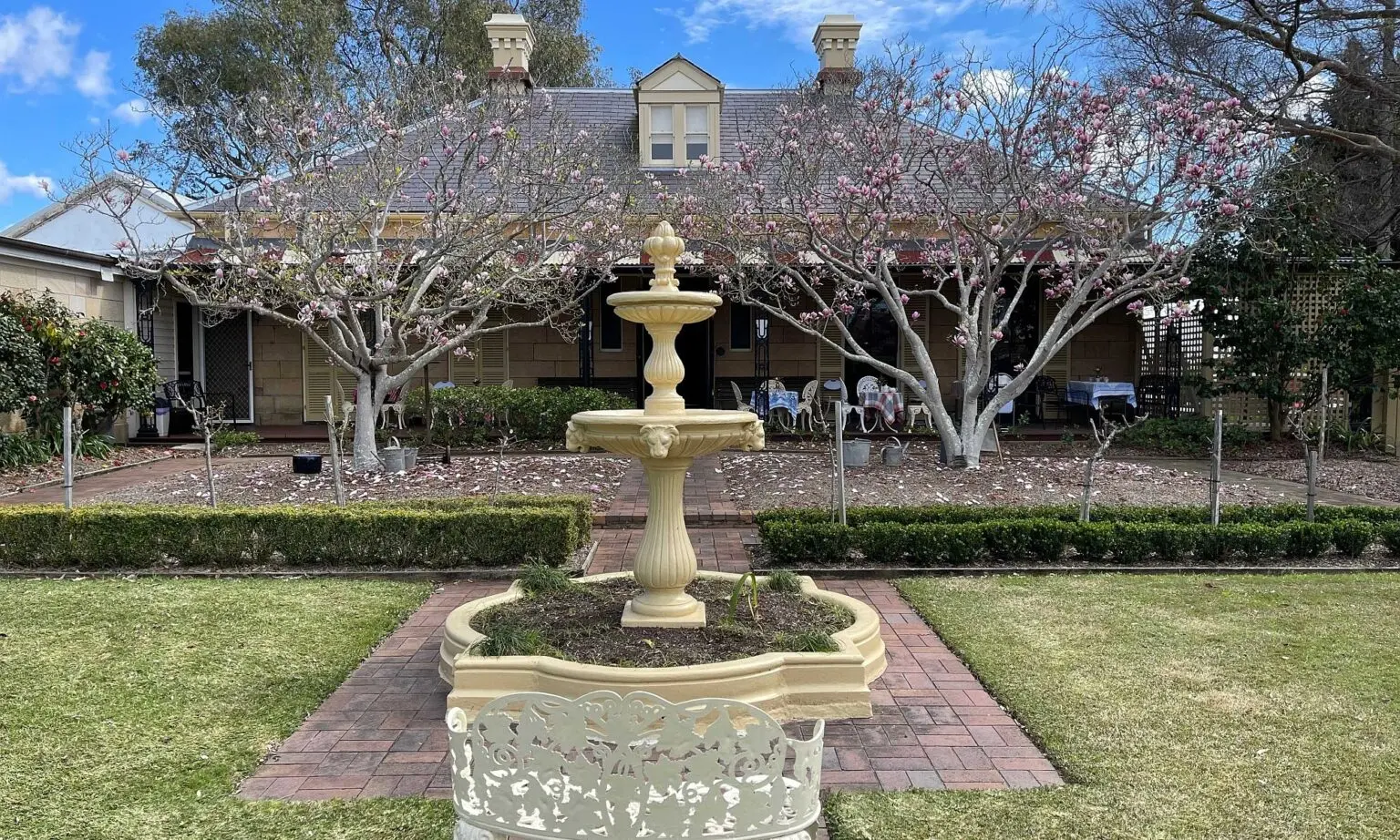

by A. & F. Day
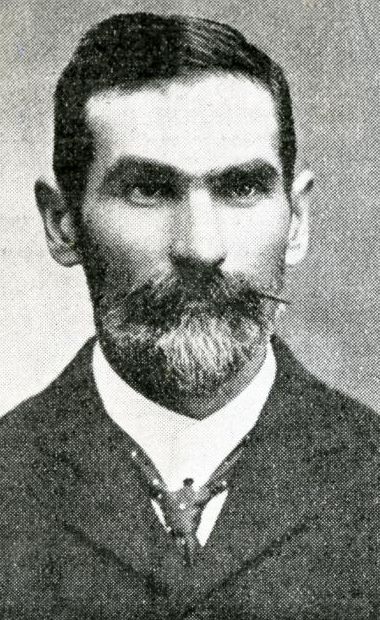
A sparsely settled area with much bushland frequently runs a risk of fire in summer time, so in September 1900 (the year of Bexley’s birth as a separate Municipality), the provisions of the Fire Brigades Act (1884) were extended to Bexley. Three years later (10 August 1903), Rockdale Council’s Alderman William Taylor, a Suburban Councils’ representative on the Fire Brigades Board from 1894 – 1922, addressed Bexley Council, advising that the Board hoped soon to place a sum on its estimates for the purchase of a site for a Bexley Fire Station. As a result, land at the southeast corner of Queen Victoria Street and Forest Road, with frontages to those streets of approximately 49 m and 65 m respectively, was acquired the following year. This land immediately became non-rateable and had to be struck off the Council’s Rate Book, with a consequent loss in rates, at that time of 17 shillings per annum.
As a fire station was urgently needed in the district, the Board decided to lease a property in what was later to become the Bexley shopping centre, for use as a temporary fire station. This was situated opposite the Post Office. The horse-drawn fire fighting appliance with which the station started in June 1905, may have been primitive, because a year later it is recorded that “an improved fire waggon was now available at the Fire Station”.
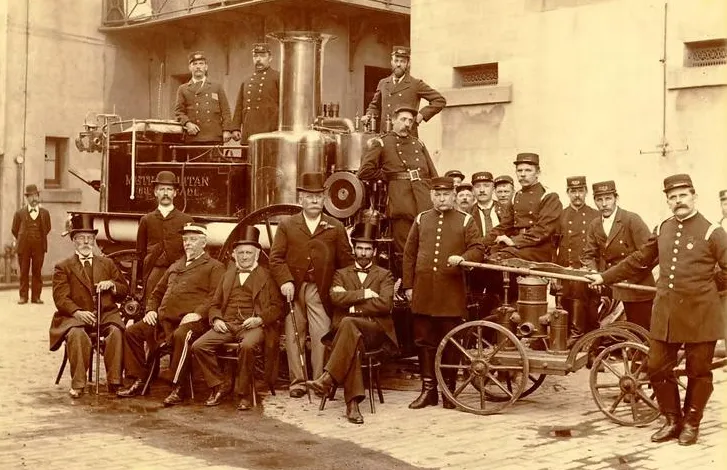
The Board had, in July 1907, £1500 allocated to the construction of the future fire station. Unfortunately it took three years to select a tender and complete the work. In the meantime, the Fire Brigades Board submitted the name of Ernest Lindsay Thompson (architect, and City of Sydney alderman from 1900 – 1927) for insertion in the Municipal Roll for election purposes. The Council Clerk replied that the land was Government property, it was exempt from taxation and no Council vote could be allowed for it. The Board was charged by the Council for kerbing and guttering at the ordinary rates ruling at the time (1 shilling and threepence of total cost, plus 1 shilling each for pipeholes).
The single-storey brick station in the Federation Arts and Crafts style opened on 7 March 1910 with a fire bell used to summon any of a volunteer force who might be within hearing. On 14 April 1914, the Council resolved to ask the Fire Brigades Board for a permanent firemen. However, the First World War intervened and it was not until the following year that the request was acceded to.
In 1914, the first two telephone fire alarms went into service – at the corners of Union Street/Grantham Street and Webbers Road (now Willison Road)/Durham Street. A third alarm was installed at the Forest Road/Waratah Street corner in November 1921. Several others were installed in August 1939. Bexley Fire Station was connected to the Kogarah telephone exchange in March 1919.
In 1939, Bexley Fire Brigade was praised for its work at a fire in Bexley North.
However, a most unfortunate delay occurred in connection with a fire in a house at the corner of Shirley Street and Rawson Avenue in September 1944. Smoke was seen issuing from the windows at 4 pm and a passerby rang the Fire Brigade on the nearest public alarm. Waiting until 4.15 pm without result, he rang again, still without result, and finally went to the Fire Station in his own car. He was informed that the phone was out of order. Also, the person in charge of the station was a new hand and did not know where Rawson Avenue was located. The brigade finally arrived at the scene of the fire at about 6 pm. The extent of the damage is not known.
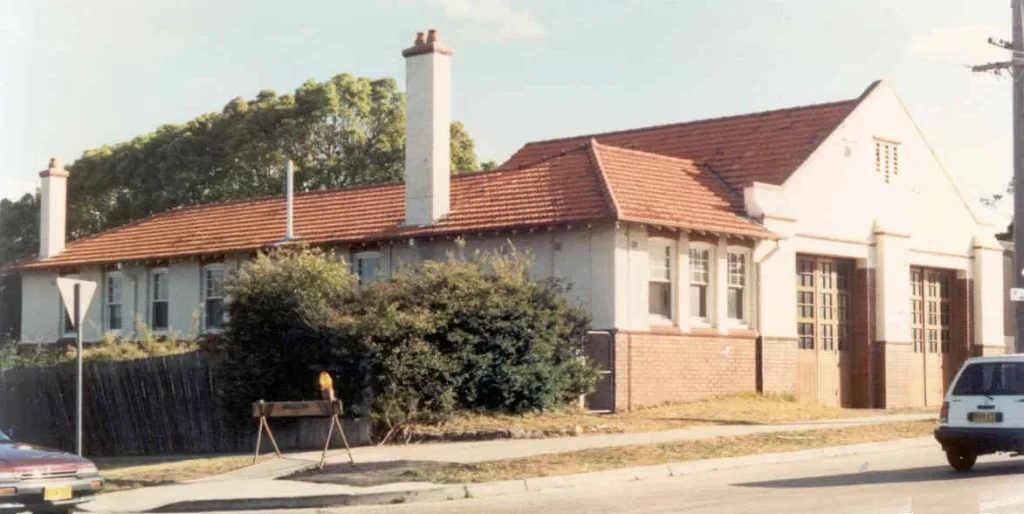
The Council was anxious to have the district fire headquarters established at the Bexley Fire Station and in March 1926, made the request to the Board of Fire Commissioners, but it was refused. A request was also made in 1929 for some of the vacant corner of the fire station land, so that corner of Queen Victoria Street could be rounded, but this, also, was not agreed to. Fortunately, the fire station is set back 3 m from the “building line” at the corner and the rounding was still found to be possible.
Willoughby Council initiated a move in 1936 to have Council contributions to the cost of fire brigades abolished and Bexley Council heartily cooperated, again without success. Bexley was paying a levy of about £750 at the time, but this had doubled by the time the Council ceased to exist.
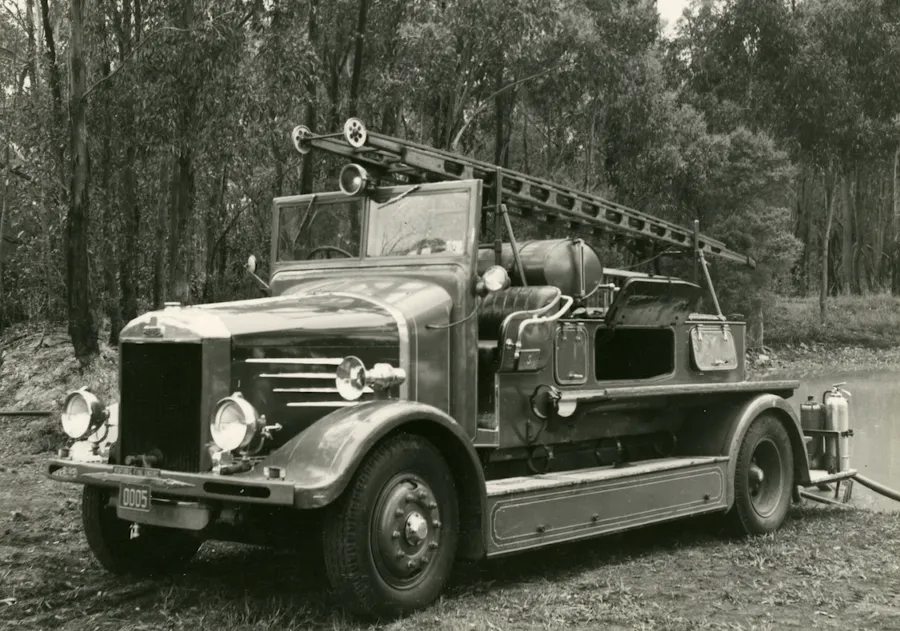
What would now be regarded as primitive manual equipment was displaced in 1924 by the installation of a motor pumping engine. This was first promised two years earlier and when it finally arrived the Council, at its regular meeting on 29 July 1924 “left it in the Mayor’s hands to arrange a suitable function”.
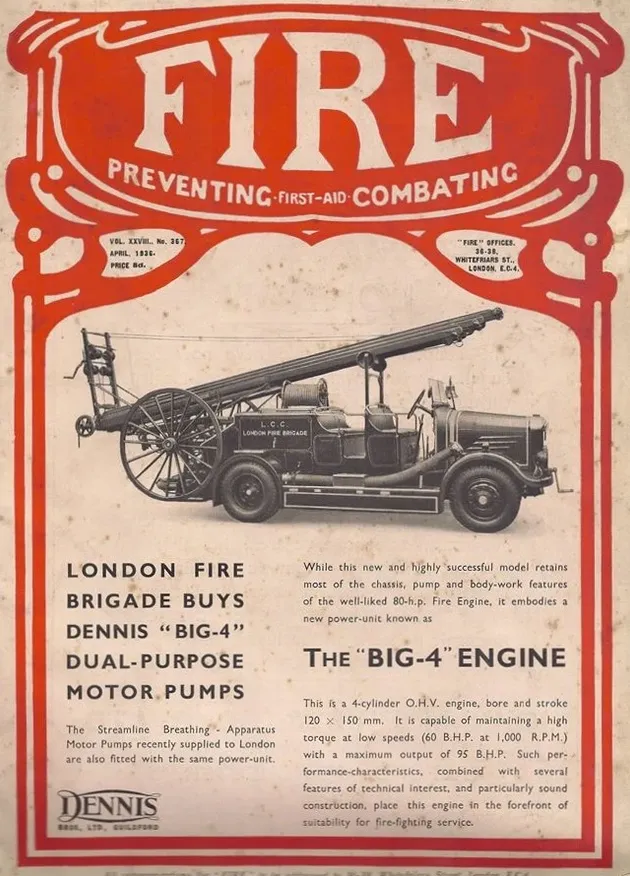
In June 1935, a modern Dennis “Big 4” engine (manufactured by Dennis Brothers Limited in Guildford, England) was installed, but apparently without ceremony.
The need for a new Council Chamber had become evident just before the second World War. Various sites were suggested and West Kogarah Progress Association urged Council to buyback land which appeared to be surplus to fire station needs. Nothing came of the idea.
The Fire Brigade had been ably served by its volunteers in the early days, so in 1932, the Board of Fire Commissioners was pleased to present long service medals to mark its appreciation. On the other hand, the Fire Brigade Employees Union was seeking a reduction in working hours for firemen from 84 to 56 per week.
It had been proposed in 1930, that Bexley Fire Station should be closed. The Council suggested that if this took place it should be used to house a family or two, or alternatively, be used as a Boys’ Club.
The onset of the war caused the retention of the station as a “second line of defence”, with two fully-equipped fire engines of large pumping capacity, housing accommodation for one officer of the brigade and a large building alongside for a number of “lend-lease” fire engines.
After the war, the building became a Brigade workshop.
Finally, Bexley Council, nearing the end of the Municipality as a separate entity, was told by the Board that adequate fire protection could now be provided by existing fire stations In the adjoining suburbs of Rockdale, Kogarah and Hurstville, so in 1945, Bexley Fire Station, like its counterpart at Arncliffe, was closed. The interior was later converted to accommodate residential apartments.
In 2021, the Bexley Fire Station became as a local heritage-listed site.
This article was first published in the April 1972 edition of our magazine.
Browse the magazine archive.
Unless noted, images courtesy of the Bayside Library Service Local History Collection.